Make a kids' memory book from voice notes
A printed memory book is the family heirloom version of your kid's phone-photo archive. Here's how to actually finish one.
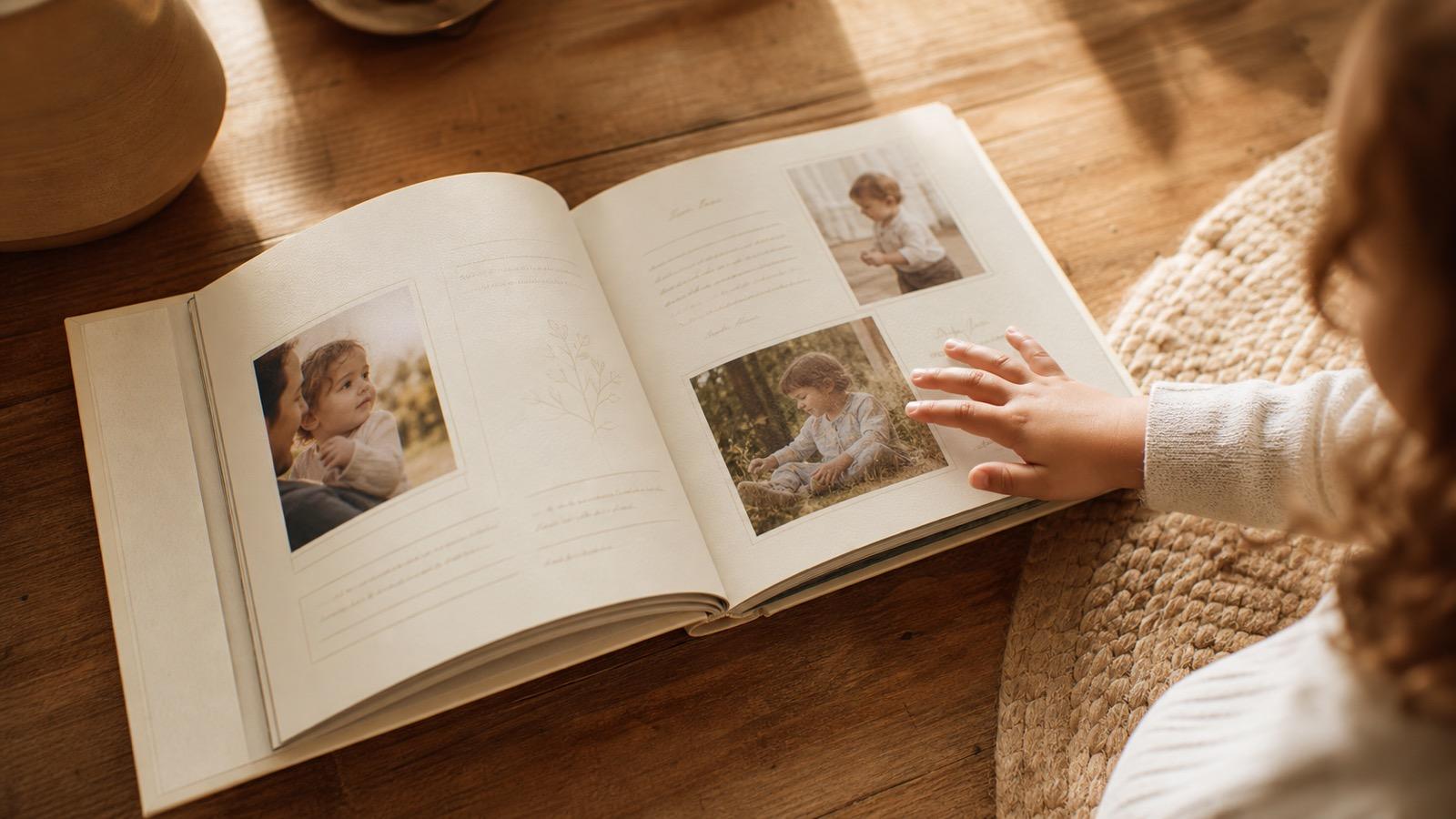
Why printed memory books matter
A printed memory book is a strange and powerful object. Your phone holds thousands of photos and recordings of your kid; you'll scroll past most of them. A book sits on a shelf. You hand it to your kid when they're 18. You read it together when they're 7 and asking what they were like as a baby. It exists outside the doomscroll.
Digital memories accumulate. Physical memories get revisited. Both have a place, but the printed book is the one that becomes a family heirloom, not just a backup.
The challenge is making one without spending 30 hours per year on it. Traditional photo books are great if you have time to design pages. Most parents don't.
The traditional approach (and why it stalls)
Most photo book apps work the same way. You pick a template. You drag photos onto pages. You write captions. You preview, you adjust, you order. Multiply by ~80 pages for a yearly book. You're looking at 10-30 hours of work, often spread over weeks.
The same friction that kills journaling kills photo books. The intent is there. The willpower runs out around page 12.
The result for most parents: one impressive book from year one, a half-finished book from year two, and a folder of unsorted photos from years three onward.
The voice-note approach
A different system: capture stories as they happen, let an app organize them, print the result.
The pieces:
1. Capture in real time. When your kid does something memorable - says something funny, hits a milestone, has a moment - voice-record it within the hour. 30 seconds is enough.
2. Add an optional photo. If you happened to take one, attach it. Most memories don't need a photo. The story is the point.
3. Let the system organize. AI categorizes by mannerism, milestone, story, age. The system files the memory in the right places. You don't tag anything.
4. Print yearly. At the end of the year, the system has dozens of memory cards in chronological order, organized by category. A printed book is built from this collection - your kid's actual moments, not a curated highlight reel.
The total time investment: about 2-3 minutes of capture per week, no design time. You skip the entire photo-book-as-side-project trap and end up with a richer book - one that has voice notes turned into stories, not just images.
What to include in a memory book
The best memory books have variety. Not just cute photos. Not just milestones. The texture of childhood:
Quotes. The exact words your kid said at three. ("Water fart" instead of "waterfall.")
Mannerisms. The way they ran. The way they held a fork. The dance they did when excited.
Phases. The dinosaur obsession. The pink-everything period. The "only chicken nuggets" year.
Milestones. Not just first steps and first solid foods. First time they apologized unprompted. First time they made a joke. First time they asked a hard question.
Hard moments. The tantrum that mattered. The fear that took weeks to work through. The grief of a goodbye. These are part of who they were.
Sweet declarations. The things they said about loving you that you don't want to lose.
Photos capture what they looked like. Voice notes capture who they were.
Tools comparison
Today's photo book apps (Chatbooks, Mixbook, Artifact Uprising) are great for visual archives. They don't capture voice or quotes. They require manual work per book.
A voice-driven memory book is a different category. Capture is real-time and effortless. The book is built from text + selected photos. The system handles organization. The output is more story-driven than visual.
These are complementary, not competing. Many parents will want both - a visual photo book AND a voice-driven memory book.